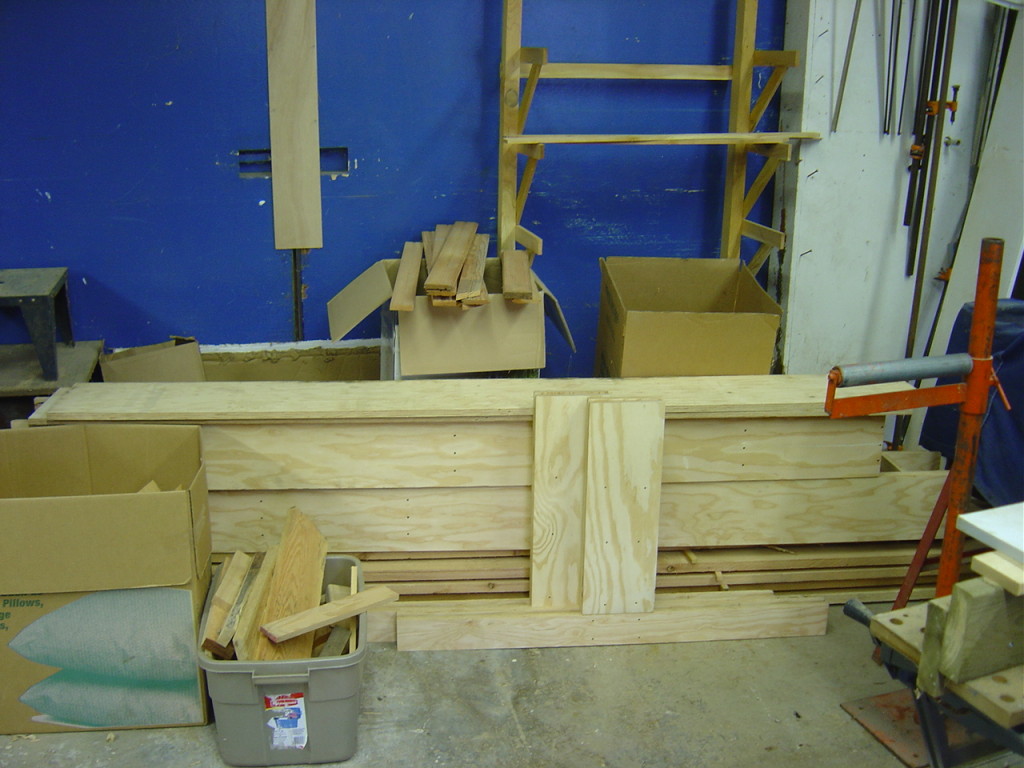
After giving the planks 8 months to dry out, they’re ready to get machined into strips. To do that the planks have to go through the thickness planer, the table saw, and a router table. Each of those operations requires an infeed and outfeed of about 18′ each. So the doors for the shop need to be open and the planks come in from outside in order to have a straight 40′ to work within.
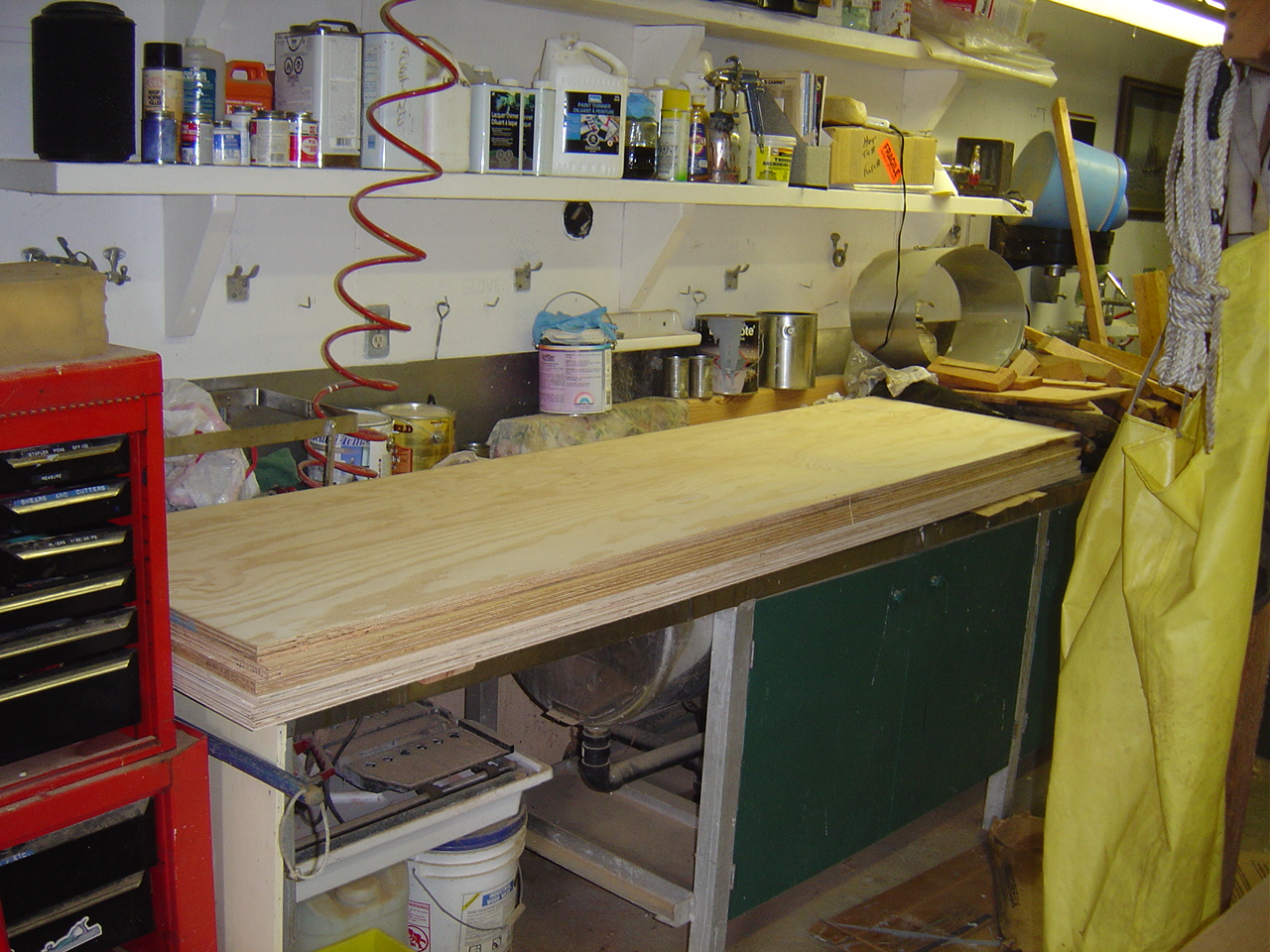
While I wait for good weather to do the machining I bought the plywood to make the strongback. I had the hardware store rip the 4 sheets I bought in half lengthwise so I could handle it more easily by myself. The rest of the cuts I could then do easily on the table saw. The strongback itself is made of two sheets of G1S fir 3/4″ plywood. I went with more expensive birch plywood for the station molds since it has fewer voids in it and the light colour will make it easier to copy the mold lines onto and cut to the line.
The strongback is a box beam on legs which supports the canoe while it’s built. Since all the station molds are attached to it, any twist or warping in the strongback will show up in the final canoe. One of the reasons that Ted Moores suggests using plywood for making the strongback is for dimensional stability. I went to great lengths to ensure that all the cuts I made were straight and square to the reference edges. The box beam itself is in three pieces to accommodate different length canoes. I used glue and screws to fasten the plywood together for the individual parts but I’ll leave the glue off the joints between sections and legs. Once the project is over I want to be able to take the strongback apart and store it in a compact fashion.
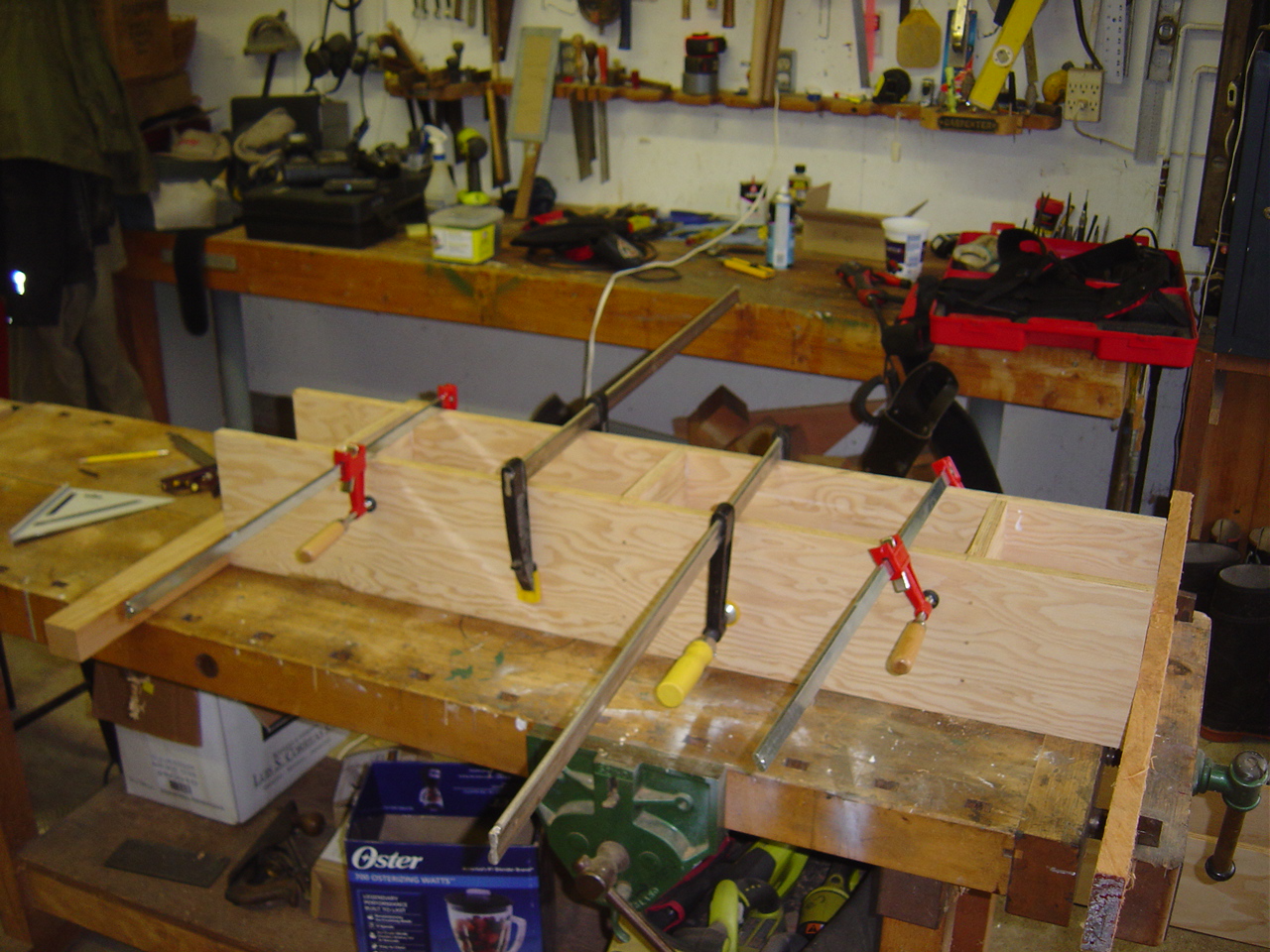
The legs are made out of three layers of plywood laminated together. The ‘feet’ are about four feet wide which should keep the whole thing fairly stable. Each corner gets a chunk of plywood that floats in between the layers and those are used to level the whole strongback on the floor.
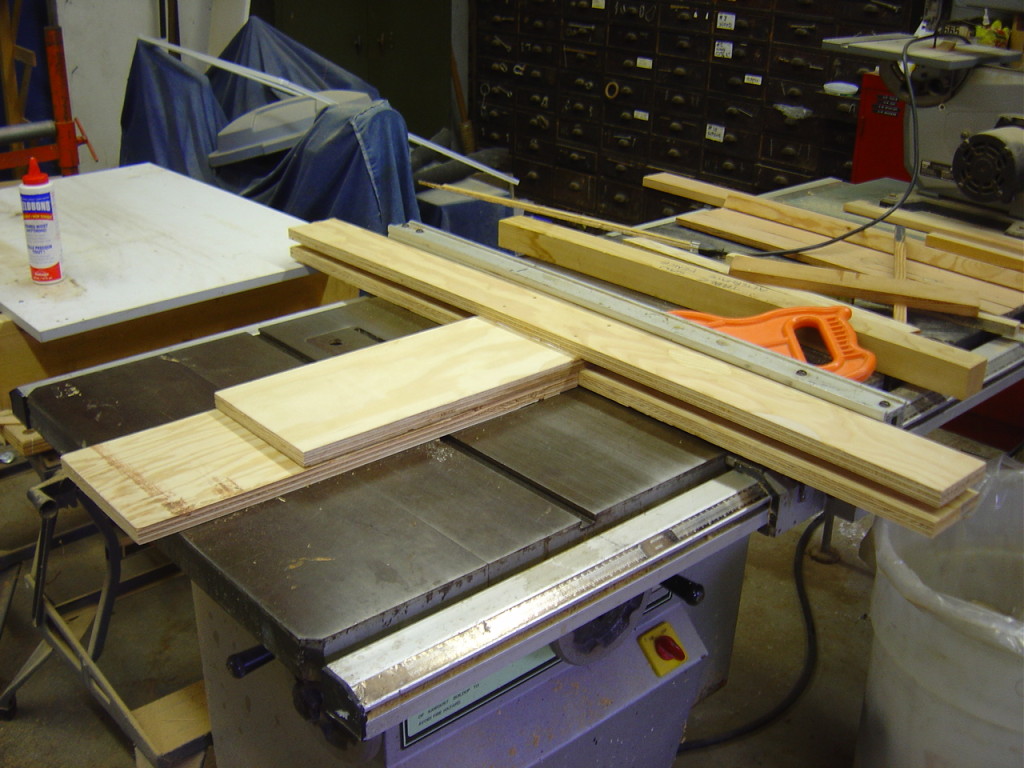
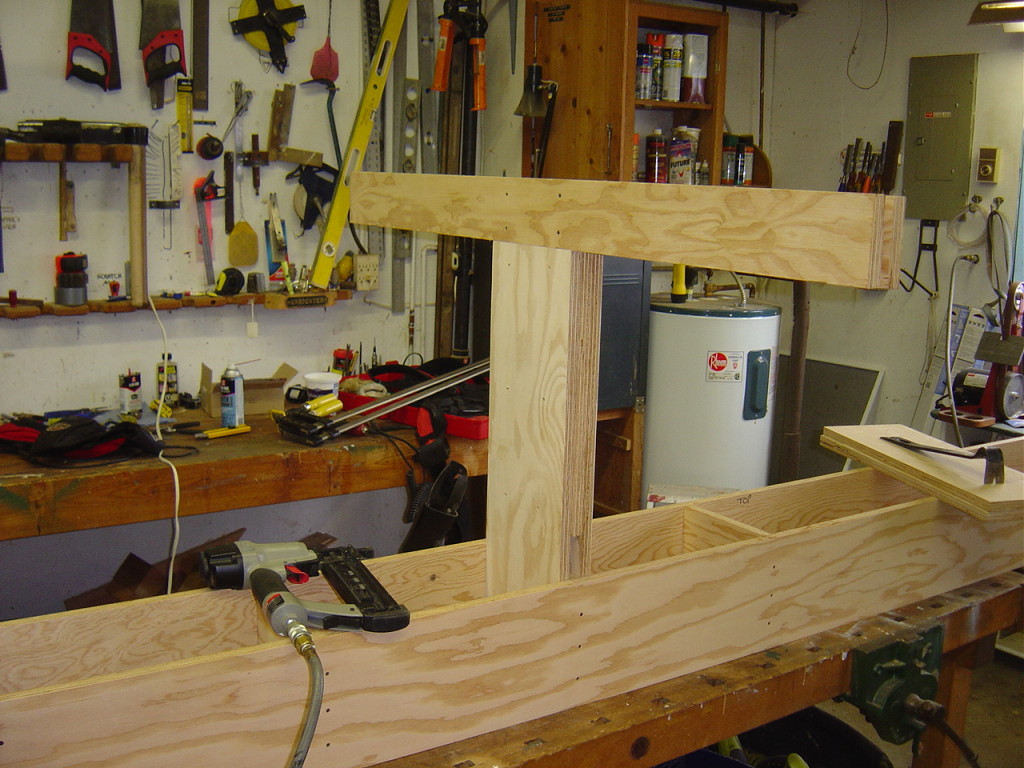
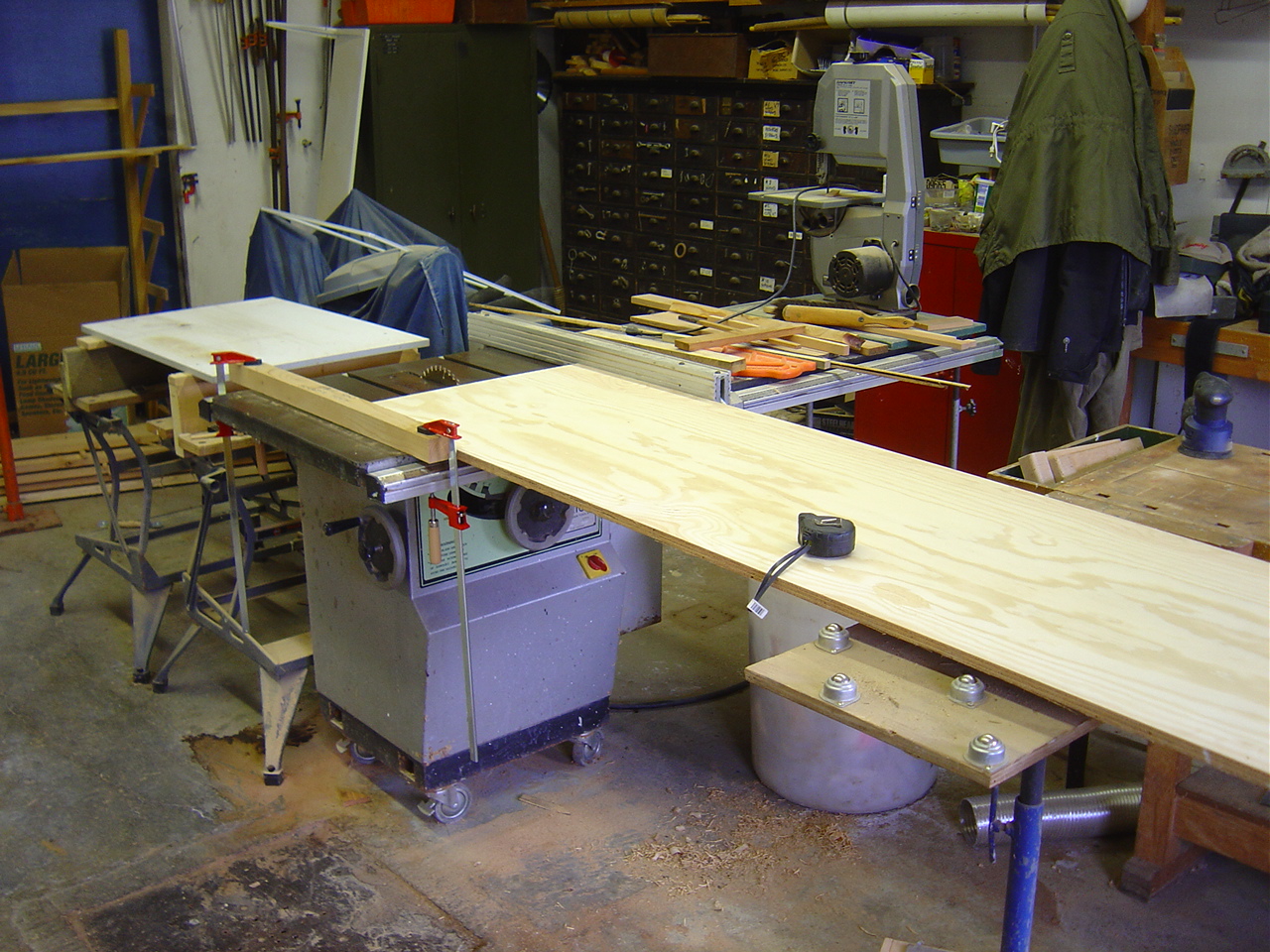
I’m going to keep the top off the box beam for now so that I can use the pieces of plywood as my infeed and outfeed tables for machining the strips. Once the strips are made up then I’ll set the strongback up in its permanent (for the duration of the build) home.