On how I used a router table to make a router table…
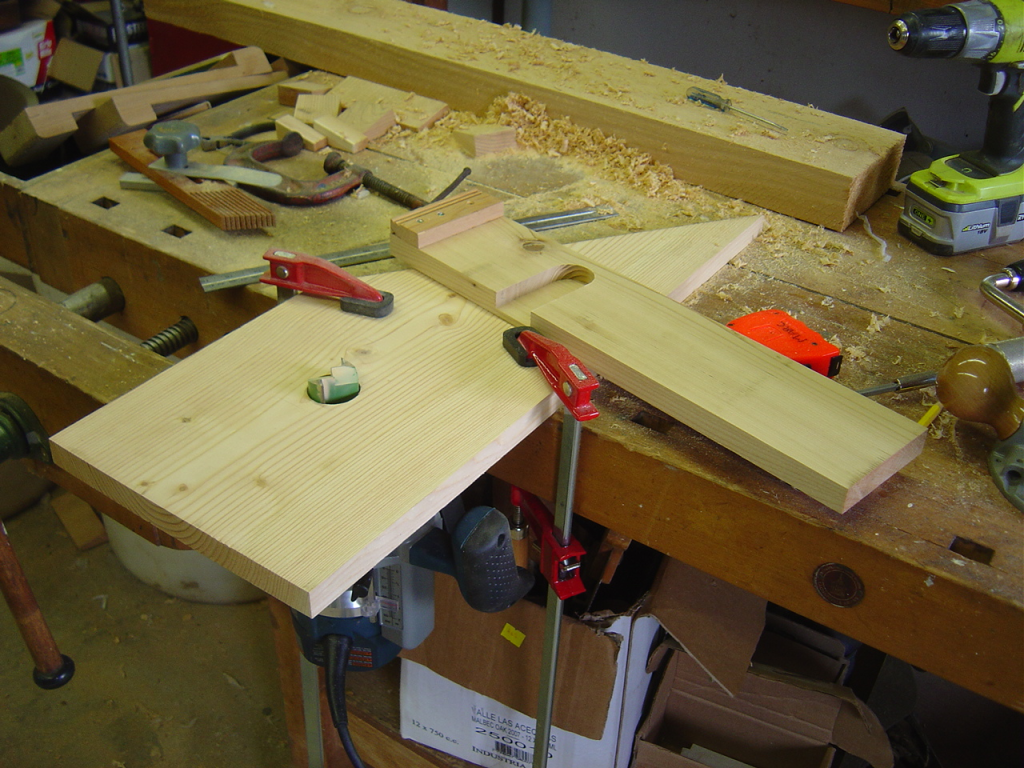
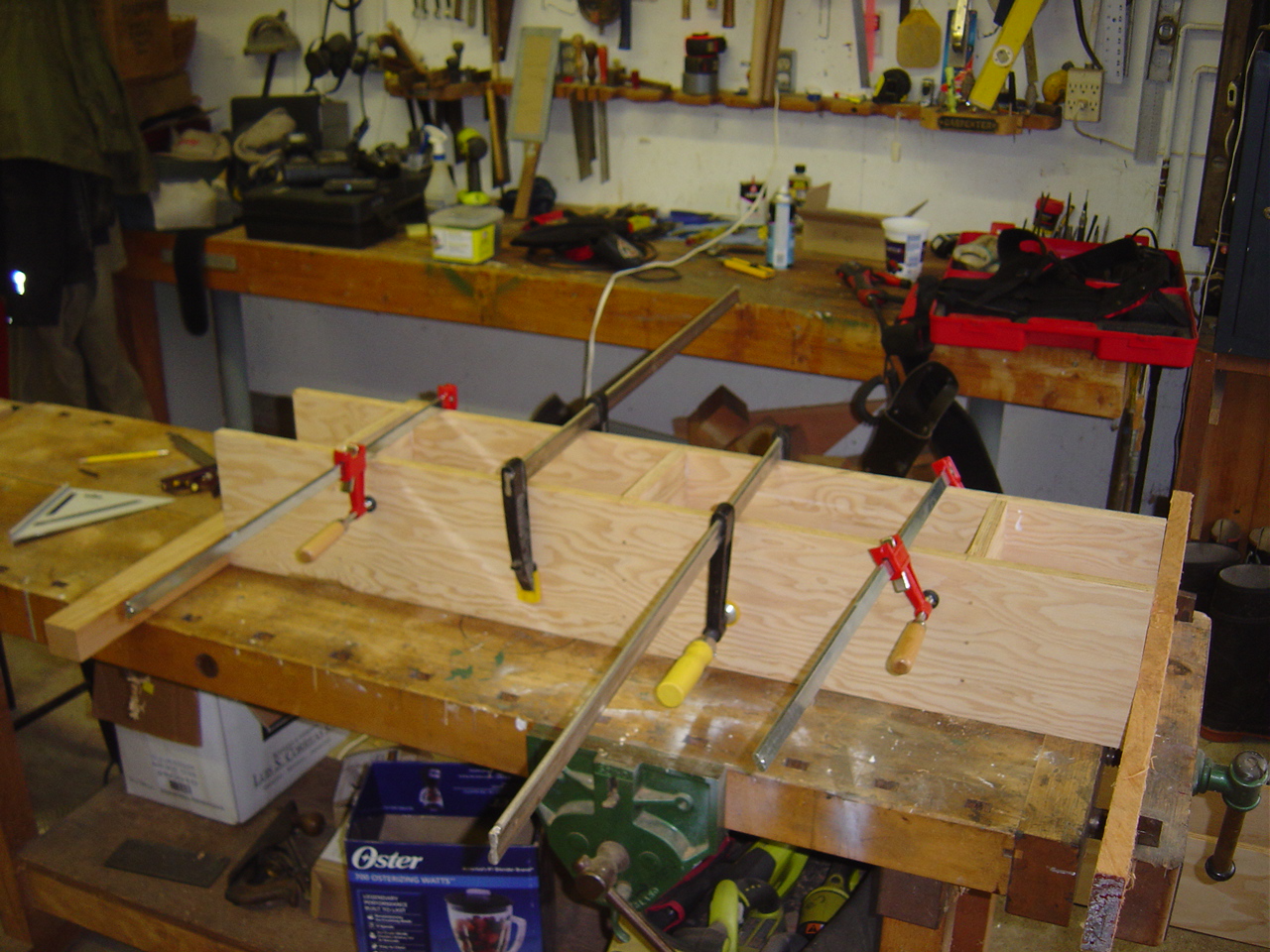
I have to make a router table to put the bead and cove edges on the strips once they’re cut. But as I was getting the parts made up for it, I realized that to rebate the bottom edge of the router plate I made would be best done on a router table. So I made a very crude router ‘platform’ to do that operation. Table is too grandiose a description for what you see above. It’s all made out of chunks from the scrap bin.
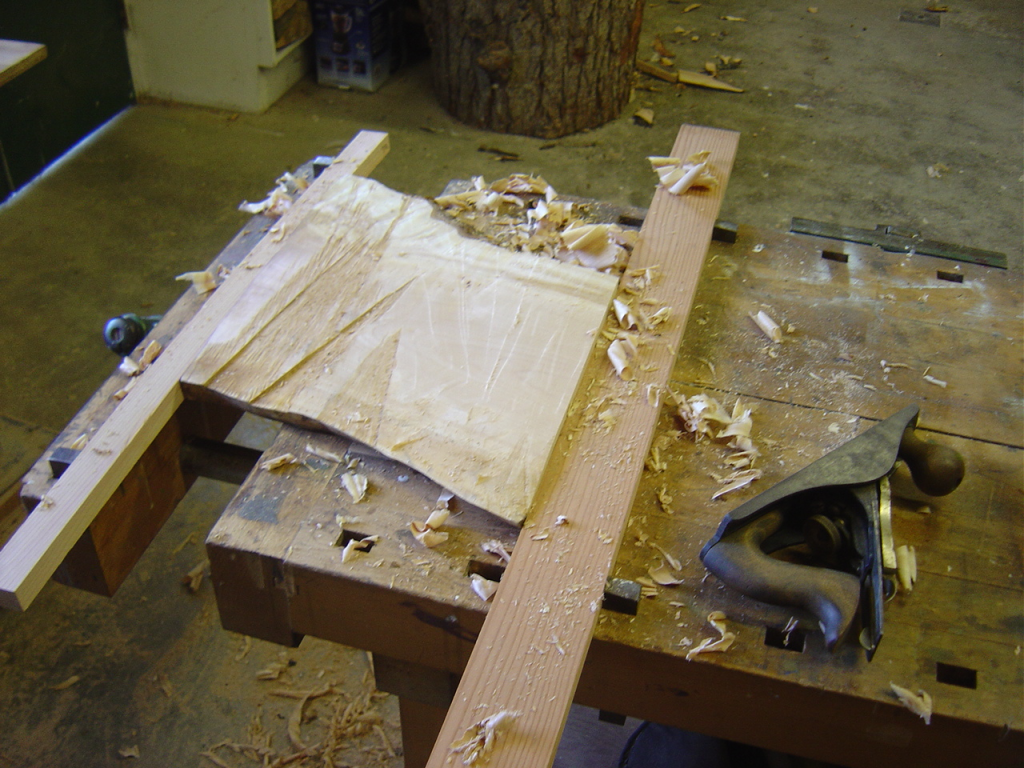
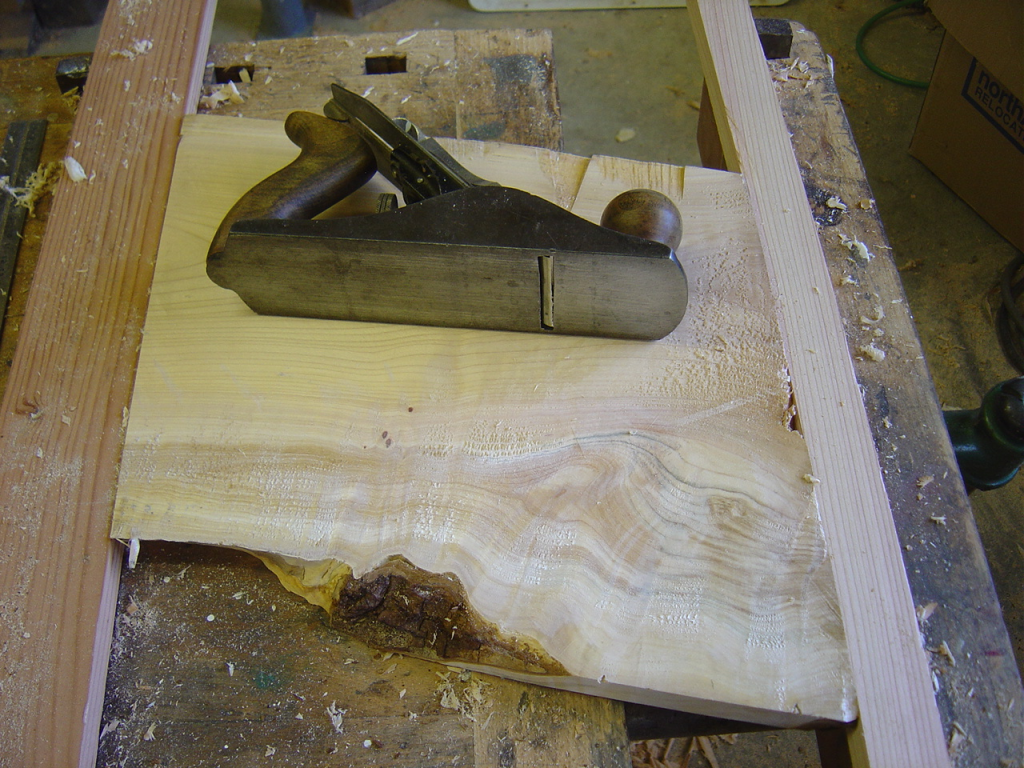
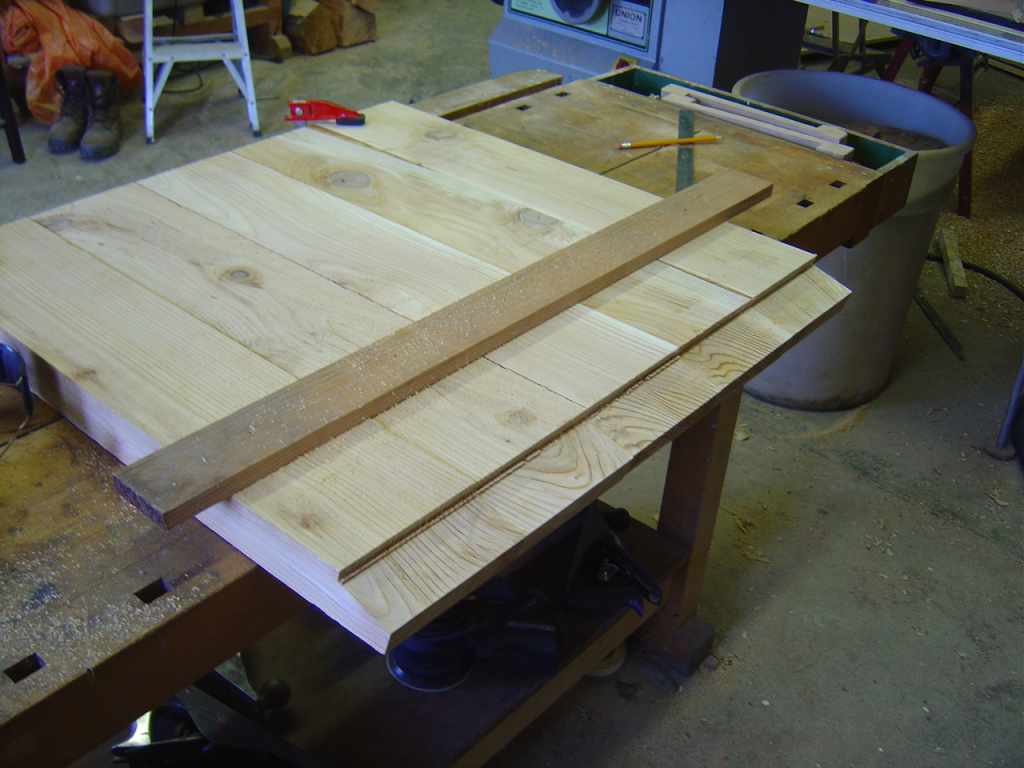
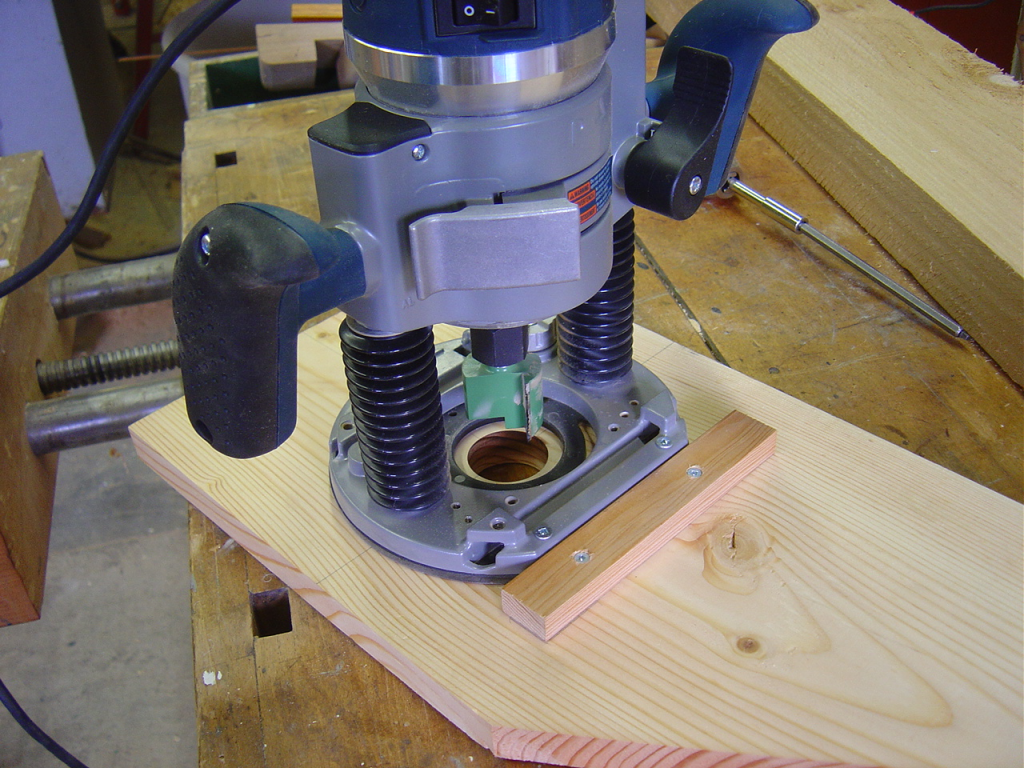 My plunge base is just screwed to a 10″ wide board with a small fence to help me get the alignment right. Then I put in a big 1-1/2″ bit and plunged through the board. The whole thing got turned upside down and bolted to the bench with a face vise supporting the outside edge. Then I planed a small chunk of cedar, stapled a guide to it to keep it square and ran it over the bit to make a fence.
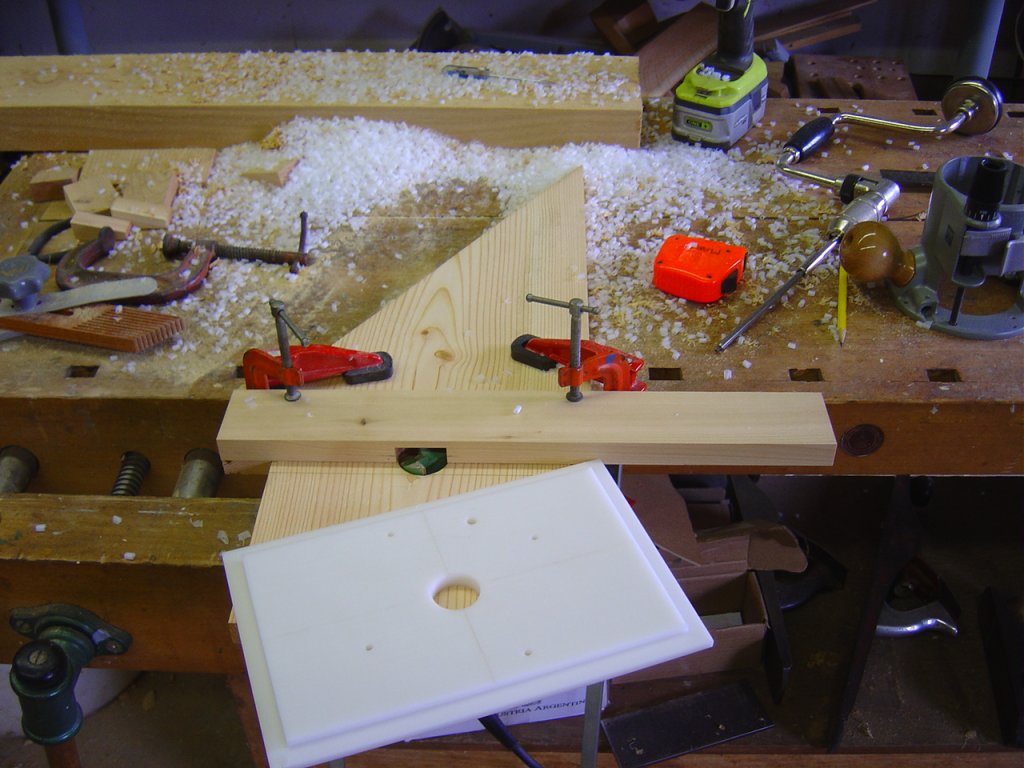
The insert is made of UHMW which machines very nicely. I would have liked to use acrylic for more rigidity, but I got this for 10 cents at the thrift store as a cutting board. Because my temporary fence has the bit groove run right through (a dado), the chips shot nicely out the back side into a pile. Something I’ll keep in mind for future fences for the more permanent table.
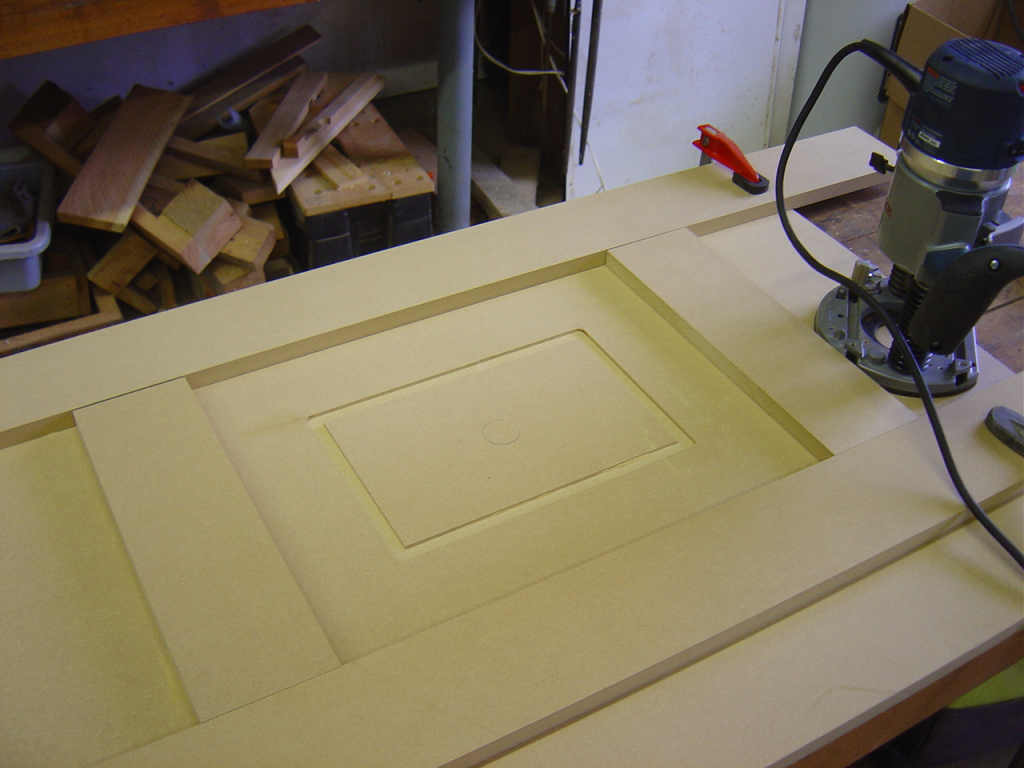
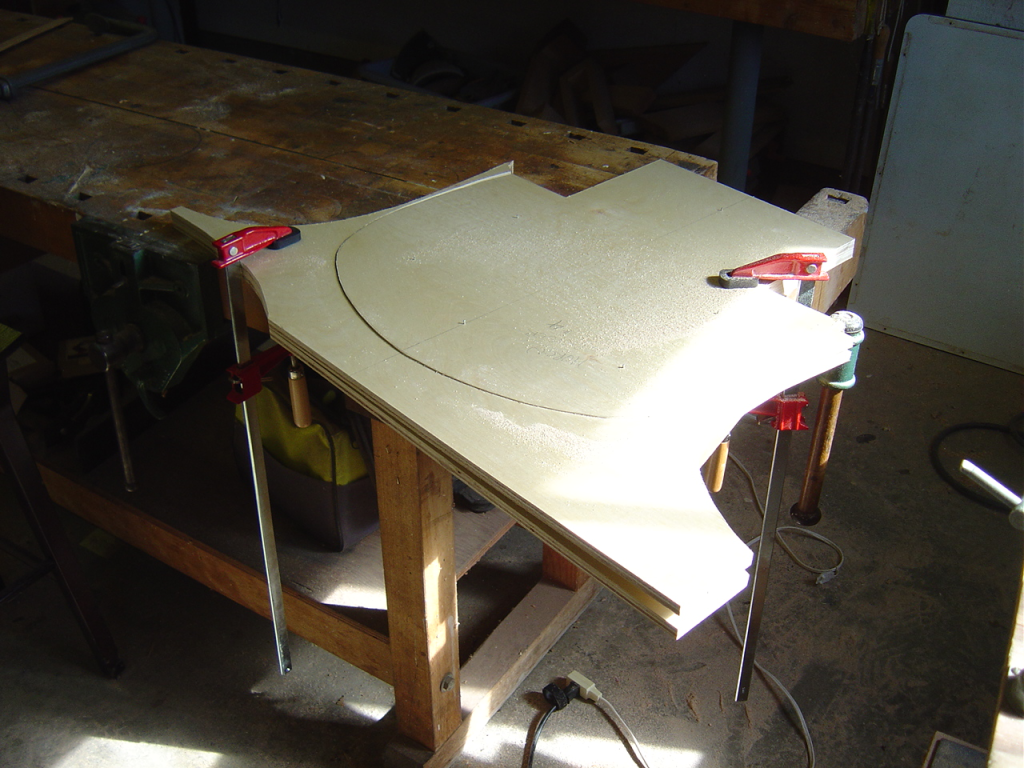
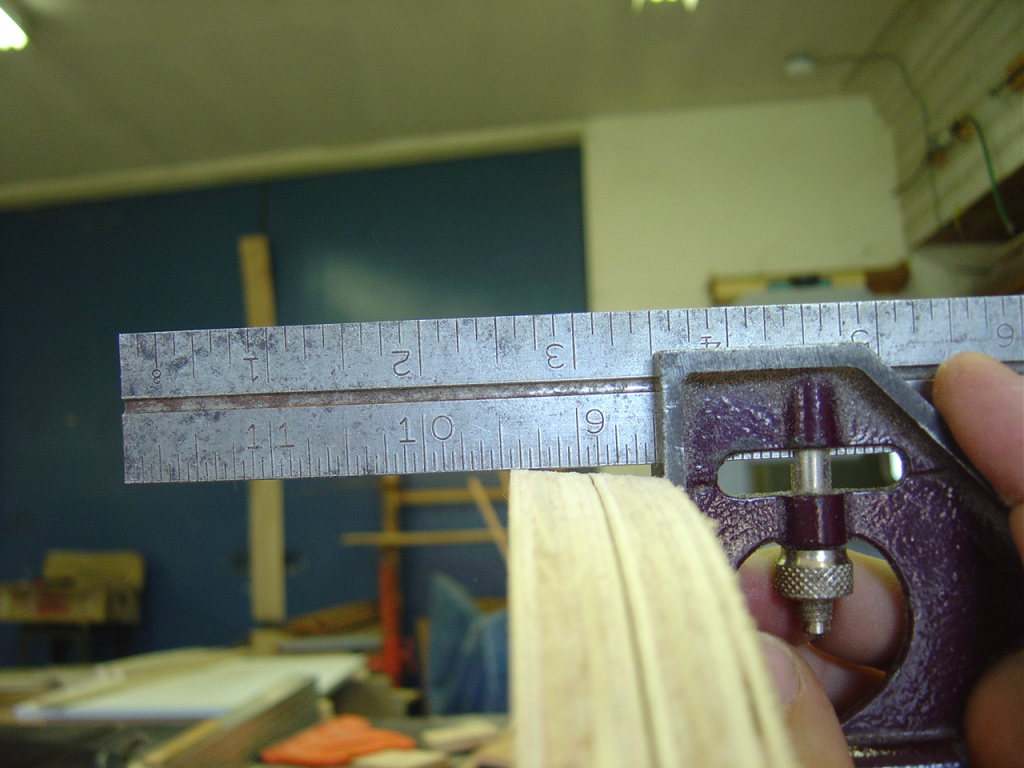
After putting the finished router plate onto my MDF surface and measuring the offsets I needed I made an enclosure for the router. A 1/2″ bit then cuts the shelf that the plate will rest on. The rebate made on the jury rig router platform sits on that lip. I didn’t want to make it the full thickness of the UHMW plate because that would have only left 1/4″ of MDF supporting the router. I’d also like to replace the UHMW plate someday with 1/4″ acrylic and then this shelf will be the right height for that.
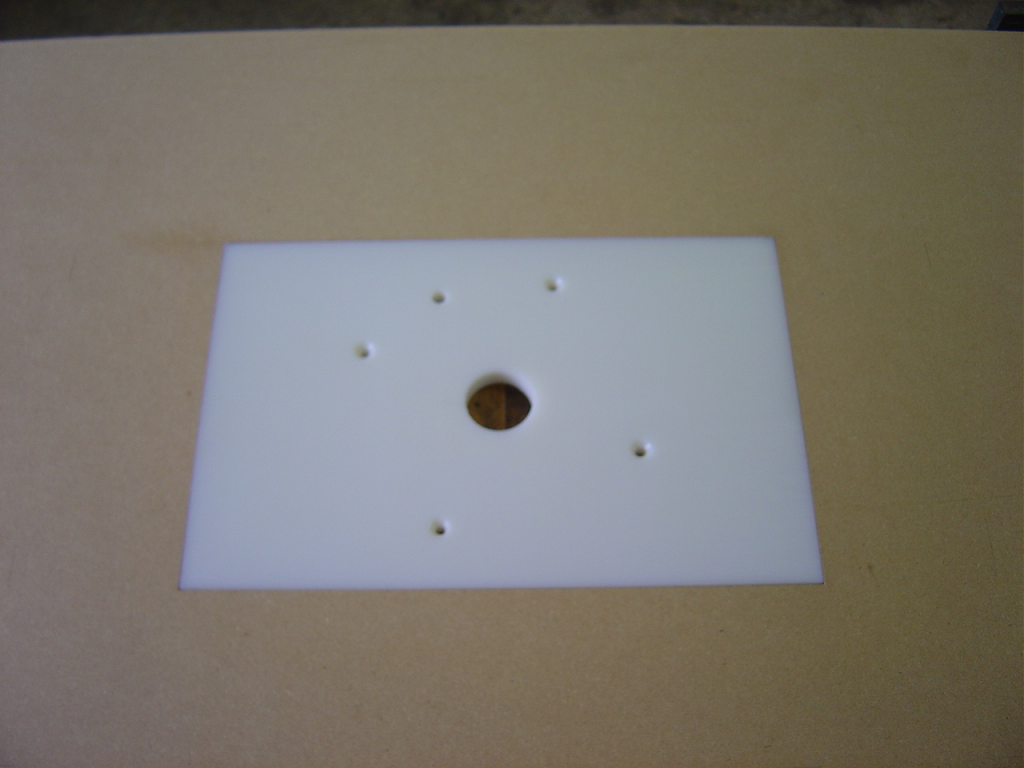
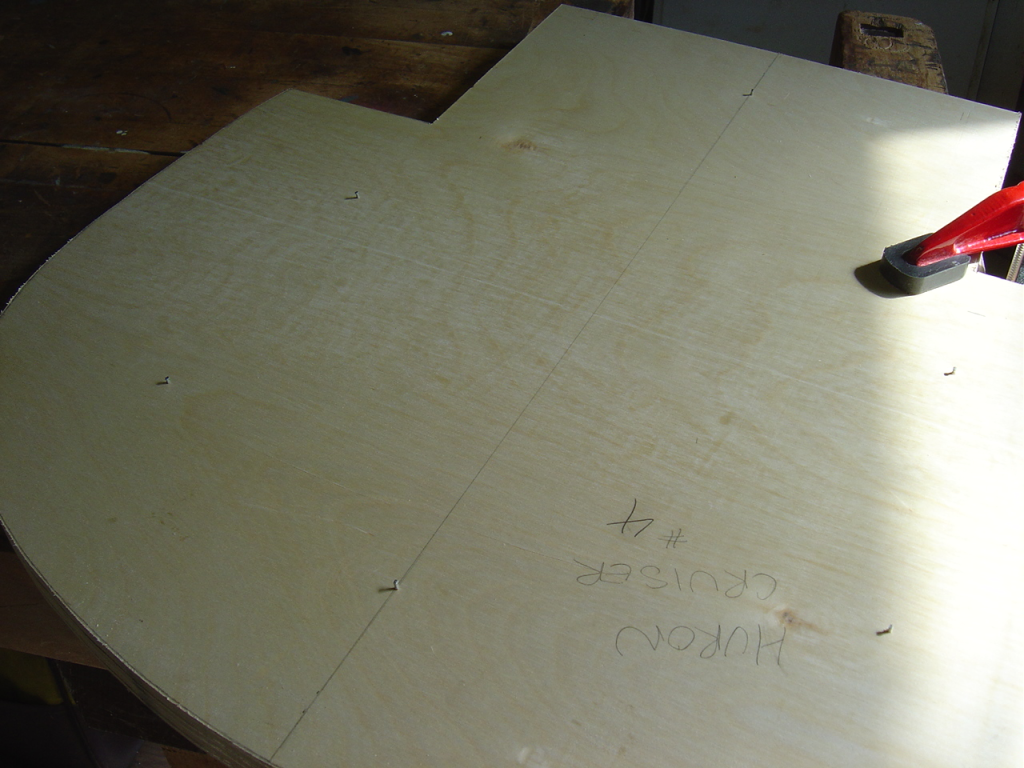
After cutting the centre out with a jigsaw and trimming the corners square with a chisel it makes a pretty snug fit. One edge (bottom in this picture) has about 1/64″ gap that I’m not too happy about, but I can make my next router plate to fit it better.
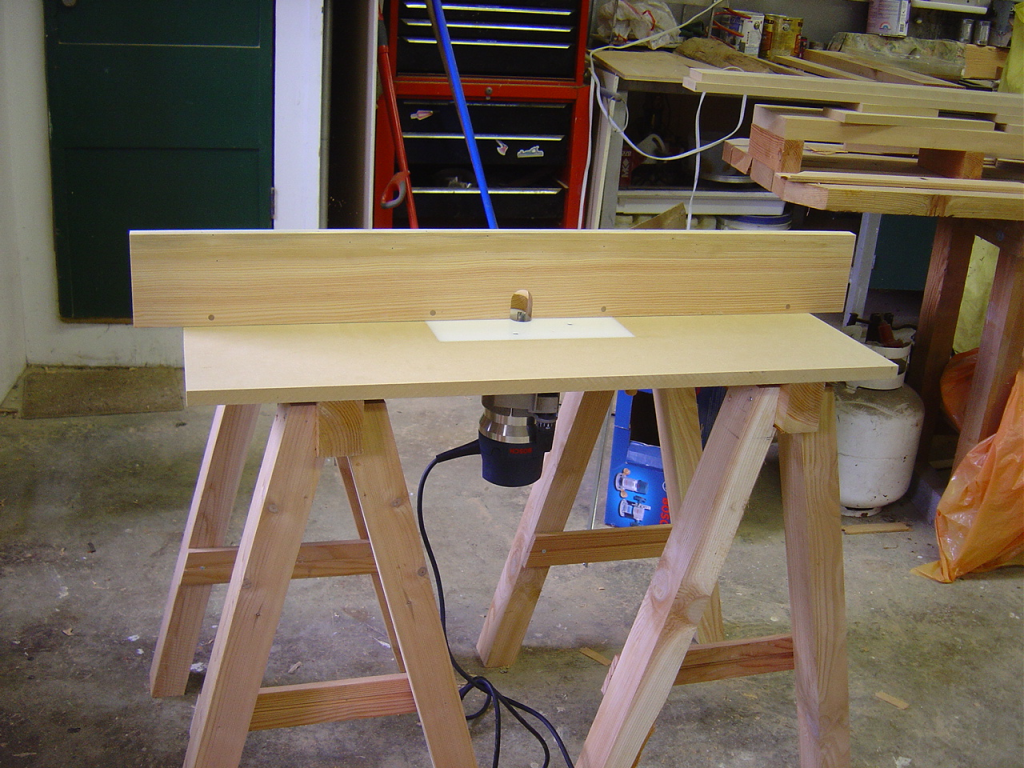
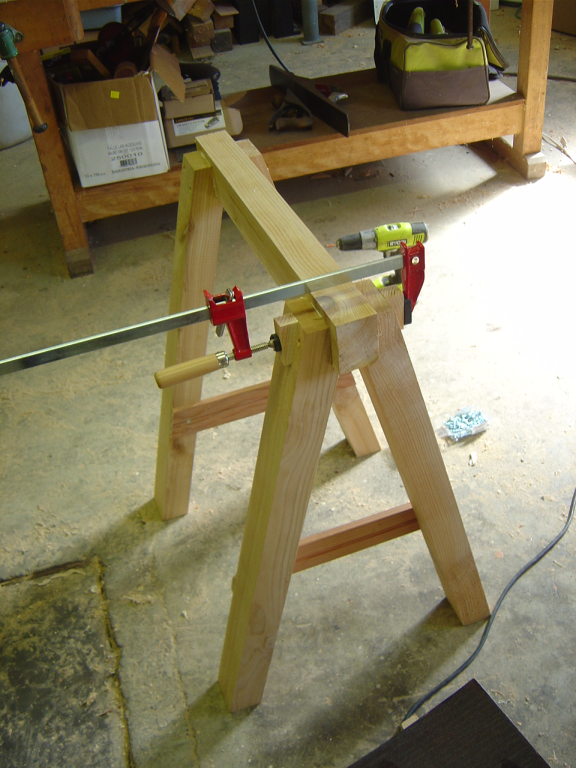
I clamped the table top to my new sawhorses and put the temporary straight fence on to try it out. It proved to be quite functional.
I’ll build a frame to support the table top and trim the edges to protect it in the long term. My tests also confirmed my suspicion that I’ll need a split fence to do the cove edge of the strips. Once the bit has cut the cove there is material missing so the strip doesn’t ride the outfeed side of the fence. I’ll have to make a bead edge to support and protect it after it has passed the bit.
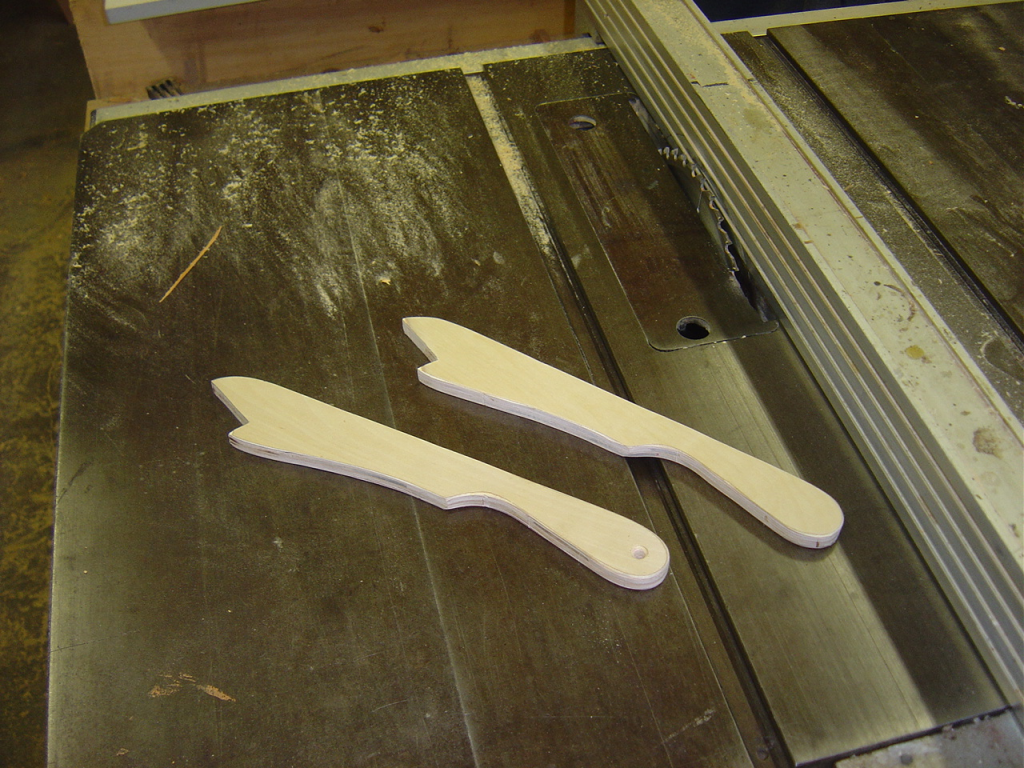
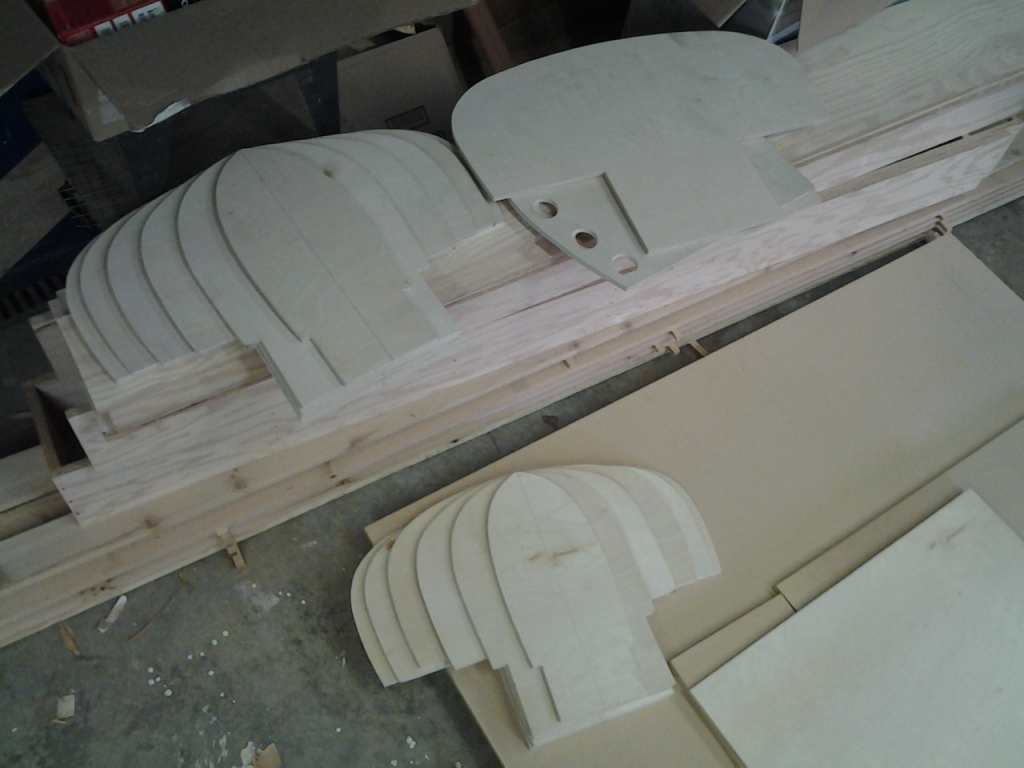
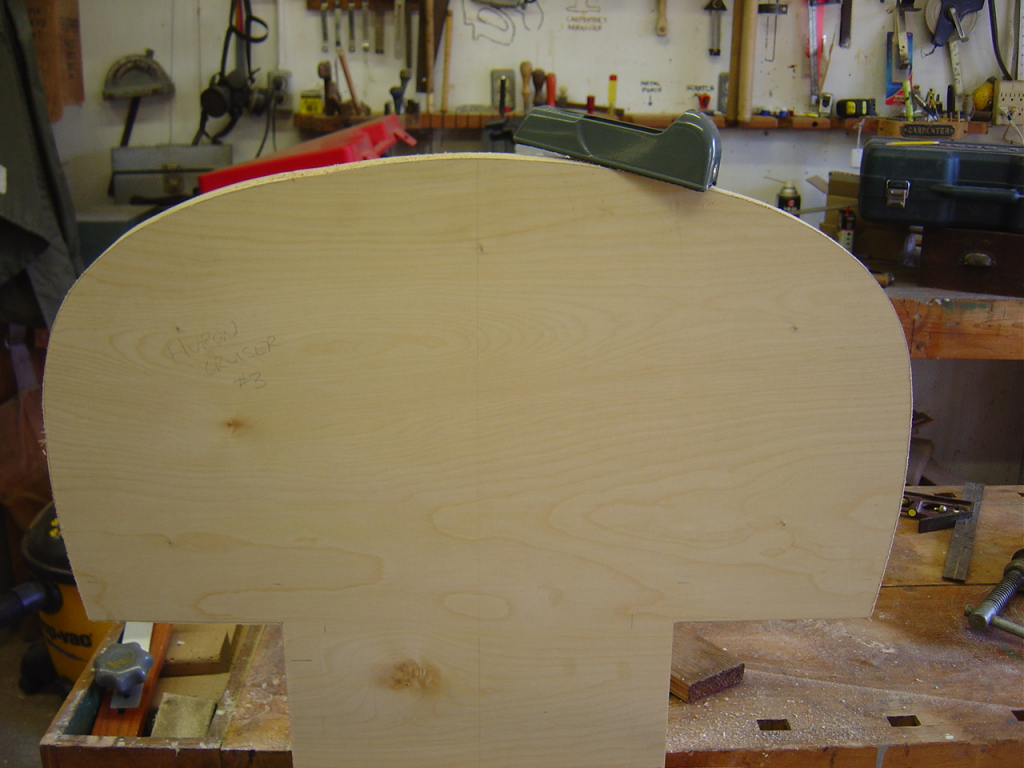
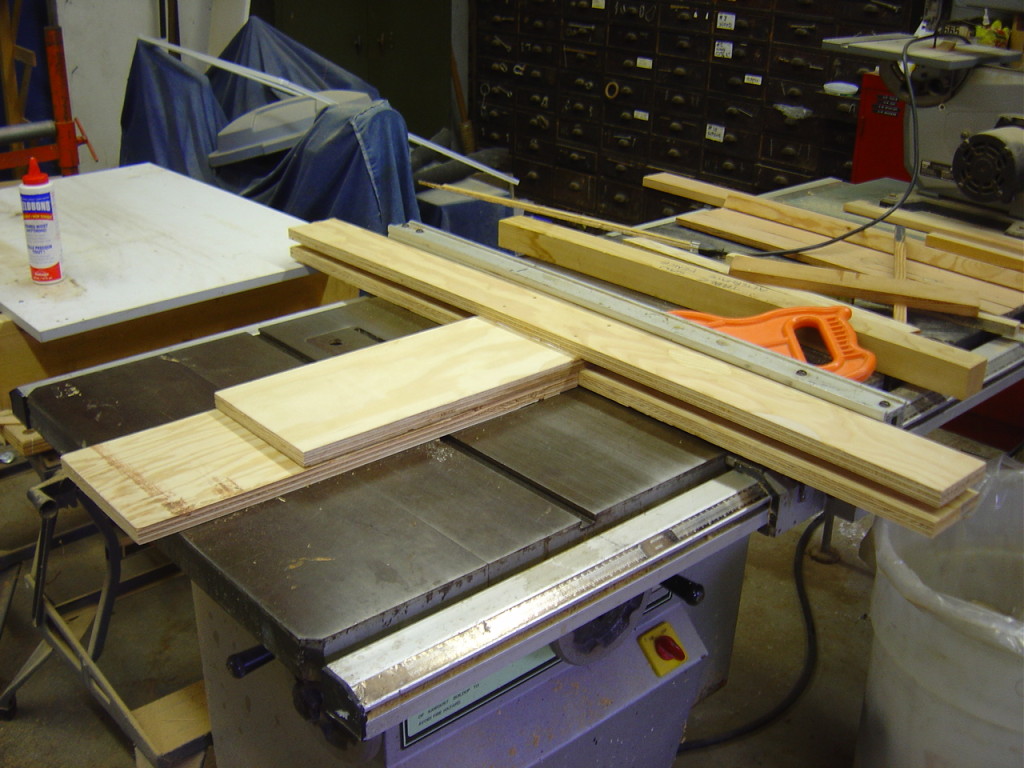
With a little bit of shop time left in the day, but not enough to start the router table frame I made up some new push sticks for the table saw. Since I have lots of odd small scraps of 1/2″ birch plywood left from the station molds of the canoe it was a good way to use some up. I used the template from Matthias at Woodgears.ca. They’re very comfortable and easy to whip up. I highly recommend them if you need to make some for yourself.